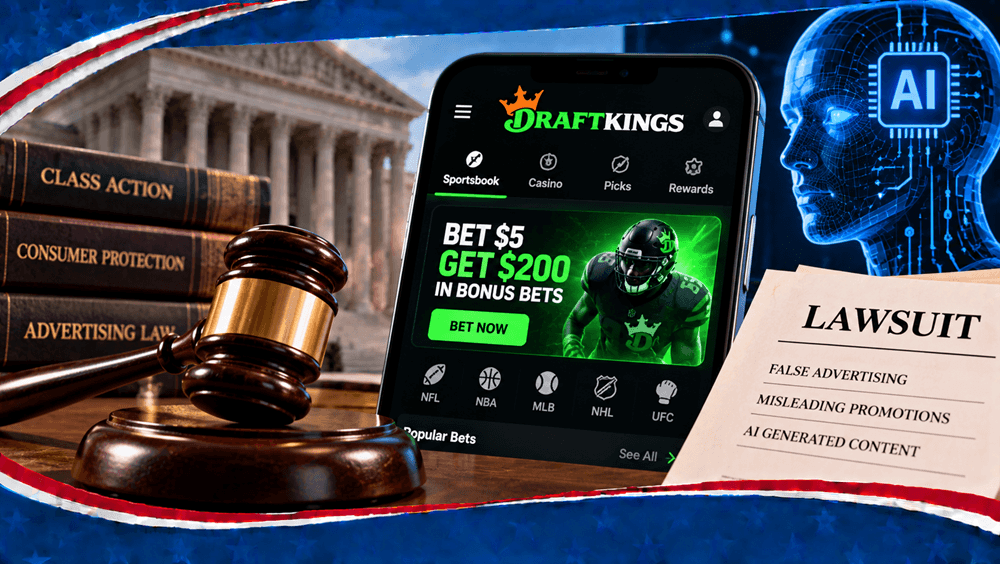
A DraftKings AI lawsuit filed in Massachusetts federal court claims the sportsbook used machine learning to find customers most likely to lose money, then sent them more promotions. It is a proposed class action, and none of its claims has been tested in court.
The suit follows a September New York Times investigation into how DraftKings uses customer betting data. Gaming regulators in Massachusetts and Michigan have already started reviewing the issues the Times raised.
The same week brought two related stories about how operators market to bettors: FanDuel’s disclosure about personalized VIP videos, and a sharp rise in self-exclusion sign-ups in Pennsylvania.

Editorial Statement: We independently review and select all gambling operators. While we may earn commissions from affiliate links or paid placements, these never influence our editors’ opinions or evaluations. Every platform is assessed against our own standards, and we highlight both strengths and shortcomings, regardless of any commercial relationship.
Scrutiny of Operator Marketing at a Glance
The table below summarizes the four developments covered in this story.
| Development | What Happened | Why It Matters |
| DraftKings class action | Proposed suit filed in Massachusetts federal court by a West Virginia customer | Alleges AI was used to target bettors likely to lose more |
| Regulator reviews | Massachusetts and Michigan regulators began reviewing the issues raised by the Times | Could lead to formal scrutiny of promotion practices |
| FanDuel VIP videos | FanDuel told Congress it sent about 30 personalized athlete videos in two years | Lawmakers question whether VIP outreach encourages continued betting |
| Pennsylvania self-exclusion | 9,677 new enrollments in 2025-26, up from 8,197 | Shows growing use of player protection tools |
What the DraftKings AI Lawsuit Alleges
The suit was filed by Daniel Vest, a DraftKings customer in West Virginia. He alleges he received at least 70 emails, texts, notifications, and other promotional messages in a single month.
It draws heavily on the Times investigation, which reported that DraftKings built a machine-learning model from customer betting records. According to the Times, the model predicted how promotions would affect each user’s eventual wins and losses.
Vest alleges DraftKings used that model to identify customers most likely to lose money or leave the platform. He claims the company then targeted those users with extra promotions and incentives.
The report on the suit did not include a response from DraftKings.
Why the Lawsuit Focuses on DraftKings’ Privacy Notices
The core of the complaint is how DraftKings used customer data. Its privacy notices say personal information may be used to assess responsible play and to offer resources when potentially problematic behavior appears.
Vest argues DraftKings broke that commitment by using his information “for the exact opposite purpose.” In his view, the company used the data to target customers it considered likely to generate more losses, rather than to protect them.
That framing matters legally. It shifts the argument from whether promotions are allowed to whether DraftKings used data in a way its own notices said it would not.
FanDuel Discloses About 30 Personalized VIP Videos
FanDuel told federal lawmakers that it sent roughly 30 personalized videos featuring athletes and entertainers to customers over the past two years. In a Sept. 24 letter, SVP Cory Fox said the videos were generally arranged through public services as a token of appreciation for loyalty.
Fox said the videos were not meant to encourage continued gambling. The disclosure followed criticism of a video from baseball player Bryce Harper that went to a customer who later entered treatment for gambling addiction.
Lawmakers have pressed FanDuel on whether VIP managers use personal relationships and incentives to keep customers betting. They also urged MLB and the players’ union to bar players from taking part in personalized gambling promotions.
FanDuel rejects the claim that its VIP program is predatory. It says its managers are trained to spot signs of problem gambling.
Pennsylvania Self-Exclusion Enrollments Rise 18%
Pennsylvania’s Gaming Control Board reported 9,677 new self-exclusion enrollments in fiscal year 2025-26, up from 8,197 the year before. That is an increase of about 18%.
The board handled roughly 14,200 self-exclusion requests in total, including about 4,500 from people asking to come off the lists. Enrollments since the program began now total 50,000, and about 30,000 people are currently enrolled across casino, video gaming terminal, online gaming, and fantasy contest programs.
A higher count does not necessarily mean problem gambling rose at the same rate. It can also reflect greater awareness and use of the tools.
What the DraftKings AI Lawsuit Means for Bettors
None of these allegations have been proven, and regulators have not announced findings. Still, the cases show that how operators use your data and contact you is now under real scrutiny.
You control more than you might think. Most licensed sportsbooks and casinos let you limit or turn off promotional emails, texts, and push notifications in your account settings. Set deposit limits before you start, not after a promotion lands in your inbox.
Self-exclusion tools exist in every state with licensed betting, and enrolling is free. If gambling is causing you harm, the National Problem Gambling Helpline is available at 1-800-GAMBLER.
FAQs
What is the DraftKings AI lawsuit about?
The DraftKings AI lawsuit is a proposed class action filed in Massachusetts federal court. It alleges DraftKings used a machine-learning model to identify customers likely to lose money, then targeted them with more promotions. The claims are allegations and have not been proven in court.
Who filed the lawsuit against DraftKings?
West Virginia customer Daniel Vest filed the proposed class action. He alleges he received at least 70 emails, texts, notifications, and other promotional messages from DraftKings in one month. The suit relies heavily on a September New York Times investigation.
What did the New York Times report about DraftKings?
The Times reported that DraftKings developed a machine-learning model using customer betting records. The model reportedly predicted how promotions would affect each user's eventual wins and losses. Regulators in Massachusetts and Michigan have begun reviewing the issues the Times raised.
What did FanDuel tell Congress about VIP videos?
FanDuel said it sent about 30 personalized videos featuring athletes and entertainers to customers over two years. SVP Cory Fox described them as a token of appreciation, not an inducement. FanDuel also says its VIP managers are trained to identify signs of problem gambling.
How many people self-excluded in Pennsylvania in 2025-26?
Pennsylvania recorded 9,677 new self-exclusion enrollments in fiscal year 2025-26, up about 18% from 8,197 the year before. About 30,000 people are currently enrolled across casino, video gaming terminal, online, and fantasy contest programs.
How can I stop sportsbook promotions from targeting me?
Open your account's notification settings and turn off promotional emails, texts, and push alerts. You can also set deposit limits or enroll in self-exclusion through the operator or your state gaming regulator. If gambling is a problem, call 1-800-GAMBLER.