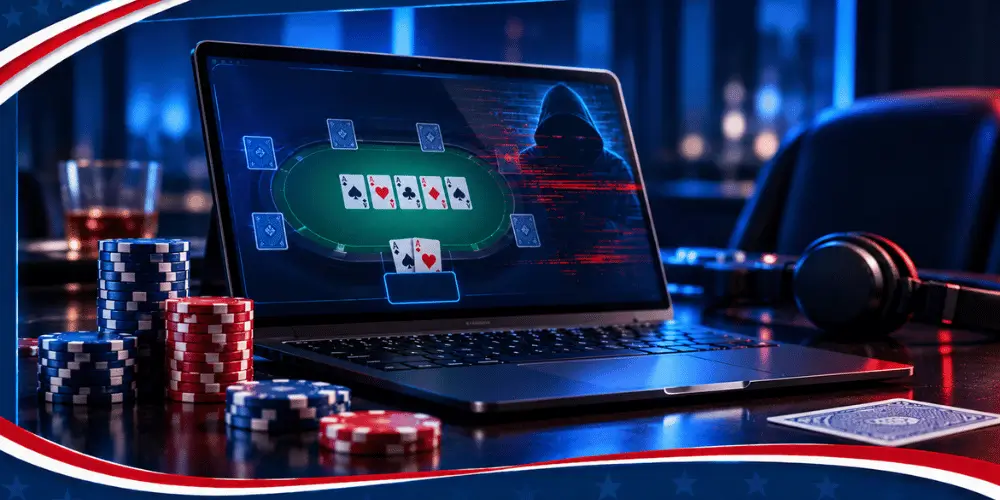
An online poker cheating scandal may have cost high-stakes players as much as $4 million, according to a new investigation. A cheater allegedly used malware to see opponents’ hole cards while they played.
The attack did not break into any poker site. It allegedly worked through software that professional players install on their own computers.
WIRED reported the findings, and Casino.org summarized them. Poker sites have responded very differently, and one major operator has refused refunds. All claims below are allegations or reported findings, and the reporting does not mention any criminal charges.

Editorial Statement: We independently review and select all gambling operators. While we may earn commissions from affiliate links or paid placements, these never influence our editors’ opinions or evaluations. Every platform is assessed against our own standards, and we highlight both strengths and shortcomings, regardless of any commercial relationship.
The Online Poker Cheating Scandal at a Glance
The table below summarizes the key facts.
| Detail | What Has Been Reported |
| Method | Malware hidden in two multi-tabling tools, Jurojin and IntuitiveTables |
| Malicious program | MeshAgent, a remote-access tool that can view and control a computer |
| What it exposed | Opponents’ hole cards, without any breach of the poker sites’ own systems |
| Possible reach | More than 1,000 users, with the harmful functions used against high-stakes players |
| Estimated losses | Up to $4 million, according to the investigation |
| Reported by | WIRED, as summarized by Casino.org on Oct. 30 and 31, 2026 |
Source: Casino.org summary of a WIRED investigation, Oct. 30 to 31, 2026.
How the Online Poker Cheating Scandal Worked
The attacker allegedly compromised Jurojin and IntuitiveTables, two programs popular with professionals who play many tables at once. Multi-tabling tools help players manage that workload.
The altered software installed MeshAgent on players’ computers. That remote-access program can view and control an infected machine, so the attacker could see the cards on a victim’s screen.
According to WIRED, the compromised software may have reached more than 1,000 users. The harmful features were switched on selectively, mainly against high-stakes players.
How One Player Discovered the Malware
A professional identified by WIRED under the pseudonym Alex found MeshAgent in September, after an AI assistant flagged the program on his computer.
He then found 11 apparent screen-monitoring events from his sessions on Americas Cardroom. One opponent, whose win rate was already unusually high, sat at the table during 10 of those 11 sessions.
Alex estimates he lost about $30,000. His records, together with the opponent’s results, are why some players doubt the poker site’s conclusion.
Americas Cardroom Finds No Cheating but Faces Pushback
Americas Cardroom is run by Winning Poker Network. Its integrity team reviewed more than 2 million hands involving players whose computers contained MeshAgent, including about 200,000 hands played by the account at the center of the claims.
The team said it found no evidence that anyone used knowledge of opponents’ hole cards in the hands it reviewed. The site then told customers it would not issue refunds.
It did close the suspected player’s account after considering information from other operators. Some players are skeptical, pointing to Alex’s records and the opponent’s win rate.
Americas Cardroom also plans to turn on ScreenShield by default on Nov. 4. The feature limits the ability of supported screen-capture and remote-viewing tools to display players’ cards.
How Other Poker Sites Responded
Other operators took firmer steps. The table below compares what has been reported.
| Poker Site | Reported Response |
| Americas Cardroom | Reviewed 2 million hands, found no evidence of cheating, offered no refunds, closed the suspected account, and plans to turn on ScreenShield by default on Nov. 4 |
| CoinPoker | Banned a suspected cheating account and refunded more than $100,000 to players |
| ClubWPT Gold | Banned an account and reimbursed an affected customer |
| GGPoker | Added win-rate detection, banned third-party poker software, traced suspected proceeds to a crypto wallet, and shared findings with law enforcement |
Source: Casino.org and WIRED reporting, Oct. 30 to 31, 2026.
CoinPoker told WIRED that it shared its findings about the suspected cheater with Americas Cardroom and received no response. CoinPoker had already banned a suspected account and refunded more than $100,000.
Poker coach Patrick Howard says he warned GGPoker about suspicious results before the scheme became public in September. GGPoker has since asked Coinbase to restrict the account tied to the suspected proceeds and to preserve its records.
What the Online Poker Cheating Scandal Means for Players
The biggest lesson is that your own computer can be the weak point, not the poker site. A tool you trust can be altered, as this case allegedly shows.
A few habits lower your risk:
- Remove any poker software you do not actively need.
- Download tools only from the developer’s official site, and check updates before installing them.
- Look for remote-access programs you did not install, such as MeshAgent, and remove them.
- Keep your operating system and security software up to date.
- Report opponents with unusual win rates to the site’s support team, and keep your hand histories.
Where you play also matters. Real-money online poker is legal in only a handful of states, and our guide to legal casinos by state shows what is available where you live. If a site is not licensed in your state, you have no state regulator to take a complaint to.
FAQs
What is the online poker cheating scandal?
The online poker cheating scandal involves alleged malware that let a cheater see opponents' hole cards in high-stakes games. WIRED reported that the attack worked through two popular multi-tabling tools. An investigation estimates losses of up to $4 million. The reporting does not mention any charges.
How did the cheater see opponents' cards?
The attacker allegedly compromised Jurojin and IntuitiveTables, two multi-tabling programs. The altered software installed MeshAgent, a remote-access tool that can view and control a computer. That let the attacker see victims' screens, including their cards, without breaching the poker sites' own systems.
How much money did players lose?
A report estimates losses of up to $4 million, and the compromised software may have reached more than 1,000 users. One professional, identified as Alex, estimates he lost about $30,000. These are estimates from the investigation, not confirmed totals.
Is Americas Cardroom refunding players?
No. Americas Cardroom's operator, Winning Poker Network, reviewed more than 2 million hands and found no evidence of cheating in them, then told customers it would not issue refunds. It did close the suspected player's account and plans to enable ScreenShield by default on Nov. 4.
Which poker sites banned accounts or refunded players?
CoinPoker banned a suspected account and refunded more than $100,000 to players. ClubWPT Gold banned an account and reimbursed an affected customer. GGPoker added win-rate detection, banned third-party poker software, and shared its findings with law enforcement.
How can I protect myself from poker software malware?
Remove poker tools you do not need, and download the rest only from official developer sites. Check your computer for remote-access programs you did not install, such as MeshAgent. Keep your operating system and security software updated, and report unusual opponents to the poker site's support team.